 CN
CN
What Is a Suspension Clamp? Key Features and Importance
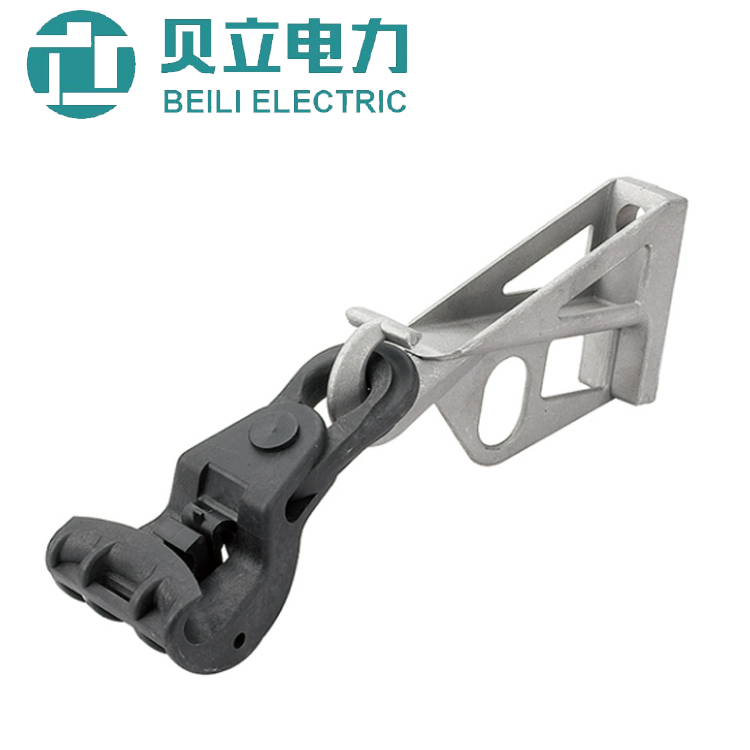
Suspension clamps are important hardware used to support and connect wires and cables with poles or towers without incurring any damage. The clamps are designed to distribute the force evenly and allow cable expansion and contraction due to temperature changes. By ensuring smooth support, suspension clamps contribute to the safety and reliability of electrical or communication infrastructure.
The mission of suspension clamp in telecom networks and overhead transmission lines is to secure the wire at intermediate locations, i.e., everywhere, when the line is straight without any end or sudden direction change. This way the mechanical stress is minimized, thus there’s no wire wear and no deterioration in the lifetime of the infrastructure.
Types of Suspension Clamps and Applications
Suspension clamps serve a variety of purposes regarding installation and cable types. The common types are as follows:
Parallel groove suspension clamps are applicable to live conductors. They offer a tight hold and ease of rotation, thus minimizing vibration.
Insulated suspension clamps: They work great with insulated wires such as abc (aerial bundle cable) lines, since the insulation does not get damaged.
Helical suspension clamps: They provide consistent support due to their interesting shape.
Fields include electric power lines, communication towers, railway electrification, and fiber optic systems. One key factor in the method used is selecting the appropriate type of clamp to reduce outages and maintain a reliable system.
What Is a Tension Clamp?
A tension clamp, known as a dead-end clamp, secures the cable at the beginning, end or a change of alignment in a network. It holds the cable tight, carrying the whole longitudinal load of the cable without any slippage. The clamp does not allow movement but keeps the cable under tension.
That’s why tension clamps serve an important function at the points where the cable needs to be firmly terminated, including places such as pole tops, sharp angles, or certain points in the network. The construction usually involves jaws or wedges that hold the cable tightly.
Suspension Clamp vs Tension Clamp: Comparison Table
| Feature | Suspension Clamp | Tension Clamp |
|---|---|---|
| Primary Function | Supports cable in mid-span, allows movement | Anchors and terminates cable, prevents movement |
| Application | Straight pole positions, intermediate supports | Line ends, angle/tension points |
| Typical Design | Curved, smooth interface for minimal abrasion | Jaw or wedge for tight grip |
| Risk if Misused | Cable slippage at line ends | Crushed or overstressed cable in mid-span |
| Common Cable Types | Bare and insulated conductors, fiber | All types, especially where high-tension support needed |
Materials, Quality Standards, and Selection Advice
Suspension clamps are usually manufactured using aluminum alloys, galvanized steel, or some composite materials, ensuring their durability and resistance to weather elements. The quality of the clamps is determined by International standards (like IEC and ANSI) and it is necessary to make sure that the clamps have been tested for their mechanical properties, resistance to corrosion, and stability to environmental factors.
When selecting a clamp, consider:
- Type of cable, thickness, and amount of load
- Environmental conditions like areas near the ocean or other industrial areas
- Compatibility with other network equipment
Get in touch with technical suppliers in connection with both network and manufacturer directives for a successful and safe installation.
Common Mistakes to Avoid
Most failures arise not from the clamp itself but from incorrect installation or choice. Do not overtighten or use incorrect sizes. Always ensure that everything is properly aligned and maintained, especially in difficult conditions, and train installation teams in using the best techniques with the right tools.
Frequently Asked Questions
Can a suspension clamp be used at a line end?
No. Line ends need a tension clamp to hold the full load and prevent slippage.
Which clamp is better for long spans?
Tension clamps handle higher longitudinal loads, while suspension clamps suit intermediate supports.
Do suspension clamps need regular inspection?
Yes. Check for wear, slippage, and corrosion, especially in coastal or industrial areas.
Looking Ahead: Trends in Cable Suspension Hardware
The design of suspension clamping devices is changing toward the use of lighter composites, the creation of tool-free clamping devices, and even smart devices equipped with real-time monitoring sensors. As electricity and telecommunications networks become more advanced, the need to choose the correct clamp is vital to ensure the safety, reliability, and efficiency of electric power systems.
The accurate differentiation between tension clamps and suspension clamps allows for reliable, effective, and durable cable installations. There is a need to match the clamp with the specifications and conditions of the network design, ensure compliance with quality standards, and seek professional advice for successful installation.
Post time: Oct-15-2026